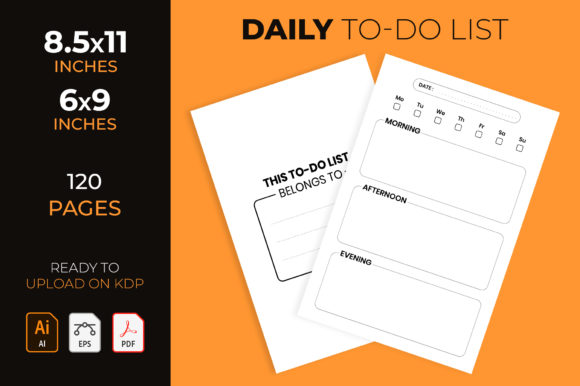
My Daily to-Do List KDP Interior for Publishers
Creating a successful low-content book on Amazon requires more than just a catchy cover; the interior experience determines whether a customer becomes a repeat buyer or leaves a negative review. For publishers targeting the productivity niche, My Daily to-Do List - KDP Interior offers a streamlined solution designed to bridge the gap between digital convenience and analog focus. This resource is specifically engineered for creators who want to launch high-quality planning journals without spending dozens of hours formatting margins, bleed settings, and repetitive layouts from scratch.
The primary value of this interior lies in its immediate usability. It removes the technical friction associated with self-publishing functional books. Instead of wrestling with grid alignment or worrying about gutter safety zones, you receive a pre-formatted asset that adheres to Amazon’s strict printing guidelines. This allows you to focus your energy on keyword research, cover design, and marketing strategy rather than layout mechanics. Whether you are an experienced publisher scaling your catalog or a freelancer creating a branded planner for clients, this template serves as a reliable foundation for professional-grade stationery.
Technical Specifications and Print Readiness
One of the most common pitfalls in KDP publishing is incorrect file setup. A manuscript rejected for bleed errors or margin violations can delay a launch by days. My Daily to-Do List - KDP Interior mitigates this risk through precise technical configuration. The package includes two PDF files optimized for direct upload, ensuring that what you see on screen matches the physical printed product.
- Dimensions: Available in both 8.5×11 inches and 6x9 inches, covering the two most popular sizes for desk planners and portable journals.
- No Bleed Settings: The layout is configured with safe margins, eliminating the need for complex bleed adjustments during export.
- Page Count: Each file contains 120 pages, providing approximately six months of daily tracking if used Monday through Friday, or four months for seven-day users.
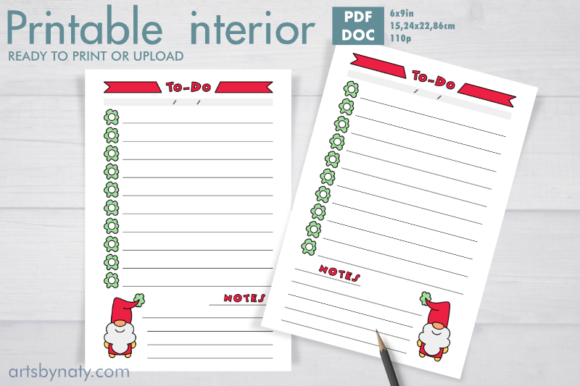
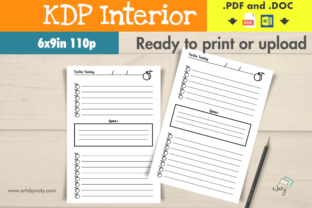
- Dual-Sided Layout: To maximize utility and perceived value, the daily to-do list appears on both sides of the page, distinguishing it from cheaper, single-sided alternatives.
This attention to technical detail ensures a smooth approval process. For publishers managing multiple titles, having a verified "master" interior reduces quality control overhead significantly.
Editability and Brand Customization
While ready-to-upload PDFs provide speed, long-term success in the journal niche often requires differentiation. Simply uploading a generic template can lead to market saturation issues. This is where the included source files become essential. The package provides editable AI Illustrator CC files and EPS vectors, granting you full creative control over the interior structure.
You can modify these files to create a unique selling proposition (USP). Practical customizations might include adding a branded logo to the footer, incorporating specific affirmations for a niche audience like nurses or teachers, or adjusting the checkbox styling to match your cover aesthetic. For business owners creating corporate swag or employee onboarding kits, the ability to insert company branding directly into the daily workflow transforms a generic notebook into a cohesive brand touchpoint. The vector format ensures that any text or graphical changes remain crisp at any print resolution.
Practical Applications Across User Segments
The versatility of a structured daily planner extends far beyond simple task management. Understanding how different demographics utilize these tools helps in crafting better metadata and advertising copy. My Daily to-Do List - KDP Interior supports various organizational methodologies, making it adaptable for diverse end-users.
Entrepreneurs and Freelancers: For solopreneurs juggling client work, administration, and marketing, this layout facilitates time-blocking. The dual-sided nature allows for separating urgent tasks from strategic goals, or keeping meeting notes adjacent to action items. It serves as an external brain, reducing cognitive load during high-stress periods.
Educators and Students: Academic environments require tracking assignments, grading, and lesson planning simultaneously. A dedicated daily list helps educators manage classroom logistics separate from personal obligations. For students, particularly those in graduate programs or medical school, the structured format supports spaced repetition study schedules and clinical rotation tracking.
Creative Professionals: Designers, writers, and artists often struggle with unstructured time. This interior provides necessary scaffolding without being overly rigid. It allows creatives to list project milestones alongside administrative chores, ensuring that billable hours aren't lost to email management. The clean, minimalist aesthetic also appeals to visual thinkers who find cluttered planners distracting.
Enhancing Productivity Through Analog Design
In an era of notification fatigue, physical journals offer a sanctuary for deep work. The design of My Daily to-Do List - KDP Interior leverages the psychological benefits of handwriting. Research suggests that writing tasks by hand improves memory retention and commitment compared to typing. By providing a dedicated space for daily prioritization, this interior encourages intentional planning rather than reactive busyness.
For users transitioning from digital apps like Trello or Asana back to paper, this format offers a familiar hierarchy. It typically includes sections for top priorities, secondary tasks, and notes, mirroring the functionality of software while providing tactile satisfaction. This hybrid appeal makes it an excellent entry point for customers looking to reduce screen time without sacrificing organizational efficiency.
Strategic Considerations for Publishers
Acquiring a high-quality interior is only the first step. To maximize the return on investment for My Daily to-Do List - KDP Interior, consider the following implementation strategies:
- Niche Down: Avoid titling your book simply "Daily Planner." Use the editable source files to tailor the content. A "Daily To-Do List for Real Estate Agents" will almost always outperform a generic version because it speaks directly to a specific pain point.
- A/B Test Covers: Since the interior is consistent, you can rapidly test different cover designs and keywords. The low marginal cost of using a pre-made interior allows for greater experimentation in marketing.
- Create Bundles: Use the 6x9 version as a companion to the 8.5x11 desk edition. Market them as a "Home and Office Organization System." The consistent internal layout creates a unified user experience across formats.
- Leverage A+ Content: Show the interior pages in your Amazon listing. Customers hesitate to buy low-content books when they cannot see the layout. Displaying the dual-sided feature and clean typography builds trust and reduces returns.
Ultimately, the goal is to provide genuine utility. While the technical readiness of this interior saves production time, its true worth is realized when combined with thoughtful curation and targeted positioning. By treating this template as a starting point rather than a finished product, you can build a sustainable portfolio of productivity tools that serve real needs in the marketplace. Whether for personal organization, business efficiency, or educational structure, a well-executed daily planner remains a timeless tool in the modern productivity landscape.