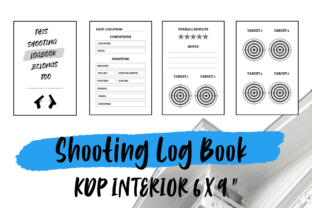
Shooting Log Book KDP Interior: Ready to Publish
Launching a low-content publishing business on Amazon requires more than just a creative idea; it demands technical precision and market-ready assets. The Shooting Log Book KDP Interior is designed specifically to bridge the gap between concept and publication for entrepreneurs in the firearms and outdoor niche. This pre-formatted template eliminates the most time-consuming aspect of self-publishing: layout design and margin calculation. By providing a professionally structured 121-page PDF, this resource allows creators to focus on keyword research, cover design, and marketing rather than struggling with formatting software.
At its core, this interior is a functional tool tailored for gun owners, sport shooters, and firearms instructors who need to track performance data. For the KDP publisher, it represents a "done-for-you" asset that meets strict platform guidelines. The file is formatted for a 6 x 9 trim size with no bleed, which is the industry standard for portable logbooks. This specific dimension ensures the book is compact enough to fit in a range bag or back pocket while offering ample writing space. Because the file has been tested and verified for KDP compliance, publishers can upload it with confidence, avoiding common rejection errors related to gutter margins or safe zones.
Why Technical Compliance Matters for Low Content Books
Many new publishers underestimate the importance of precise formatting in the low-content category. A shooting log book is not merely a notebook with blank lines; it is a specialized data collection tool. If the margins are too narrow, content disappears into the binding. If the page count does not align with printing specifications, the project faces immediate rejection. This Shooting Log Book KDP Interior addresses these pain points by arriving as a finalized, print-ready PDF.
The 121-page count is strategically chosen to balance spine width with production costs. A book of this thickness creates a visible spine on the shelf, which aids in branding and discoverability, without pushing the printing cost so high that profit margins evaporate. Furthermore, the "no bleed" specification simplifies the cover creation process. Publishers do not need to worry about artwork extending past the trim line or complex wrap-around calculations for the interior pages. This streamlined approach reduces the barrier to entry for beginners who may be intimidated by professional typesetting requirements.
Understanding the End User’s Needs
To successfully market a shooting log book, publishers must understand what goes inside the pages. This interior is structured to capture critical ballistic and environmental data. Users typically require fields for date, location, weather conditions, firearm make and model, ammunition type, distance, and group size. Some layouts also include sections for zeroing data, maintenance notes, or personal bests.
By using a pre-made interior that includes these specific prompts, you ensure the final product provides genuine utility. Generic notebooks often fail in this niche because they lack the specialized columns that serious shooters rely on. When your book solves a specific organizational problem, it transitions from a commodity to a valuable resource. This distinction is vital for generating positive reviews and repeat customers in a competitive marketplace.
Practical Applications Across Different Niches
Versatility is a key advantage of this specific KDP interior. While the primary audience consists of recreational target shooters, the applications extend much further. Understanding these sub-niches helps in crafting better book descriptions and backend keywords.
- Competitive Sport Shooters: Athletes participating in USPSA, IDPA, or PRS competitions need rigorous data tracking to analyze stage performance and equipment reliability over a season.
- Hunters and Long-Range Enthusiasts: These users track environmental variables like wind speed, barometric pressure, and elevation to build accurate drop charts for ethical harvesting.
- Firearms Instructors and RSOs: Professionals use log books to document student progress, safety certifications, and range qualification scores for liability and training records.
- Reloading Specialists: Hand-loaders often repurpose shooting logs to correlate specific powder charges and bullet weights with downrange accuracy results.
- Law Enforcement and Security: Personnel may use personal log books to maintain proficiency records outside of official departmental documentation.
Recognizing these diverse use cases allows publishers to create multiple listings or series variations using the same core interior. For example, one version could be marketed toward hunters with earth-tone covers, while another targets competitive pistol shooters with bold, tactical graphics. The interior remains constant, but the positioning adapts to the specific buyer persona.
Strategic Considerations Before Publishing
While this Shooting Log Book KDP Interior is ready for immediate upload, success still requires strategic planning. Publishers should verify that the specific layout matches their target audience's preferences. Some shooters prefer minimalist tables, while others want detailed checklists. Reviewing the preview file before purchasing or publishing ensures alignment with market expectations.
Cover design plays an equally critical role. Since the interior is standardized, the cover is your primary differentiator. Invest time in researching top-selling competitors in the shooting sports category. Note the color schemes, typography, and imagery that resonate with buyers. A professional cover paired with this compliant interior creates a cohesive product that looks indistinguishable from traditionally published titles.
Additionally, consider the paper quality implications. Standard KDP white paper is suitable for pencil and ballpoint pen, which are the preferred writing instruments at ranges due to their reliability in various weather conditions. Gel pens or markers may bleed through standard paper, so advising customers in the book description about compatible writing tools can prevent negative feedback regarding paper quality.
Maximizing Value in Your Low Content Business
Incorporating this 121-page template into your catalog offers significant operational efficiency. Creating a custom log book from scratch involves hours of table generation, font selection, and margin testing. By leveraging a tested KDP interior, you reclaim that time for high-value activities like advertising optimization and niche research. This efficiency is particularly valuable for publishers managing large portfolios or those treating KDP as a side hustle alongside other professional commitments.
The "ready for printing" status also mitigates risk. New publishers often face account warnings or blocks due to repeated submission errors. Using a verified file protects your publishing account health. It serves as a reliable foundation upon which you can build a sustainable business. As you gain experience, you can use this successful format as a benchmark for evaluating future interiors or commissioning custom designs.
Ultimately, the value of this Shooting Log Book KDP Interior lies in its combination of technical readiness and niche relevance. It respects the specific needs of the shooting community while adhering to the rigid standards of print-on-demand platforms. For entrepreneurs aged 20 to 50 looking to establish or expand their presence in the low-content space, it offers a practical, professional starting point. Whether you are a seasoned publisher diversifying your offerings or a beginner launching your first title, this resource streamlines the path from digital file to physical product in the hands of a satisfied customer.