KDP Interior Calligraphy Practice Paper Guide
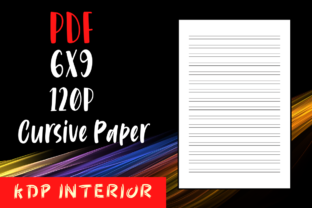
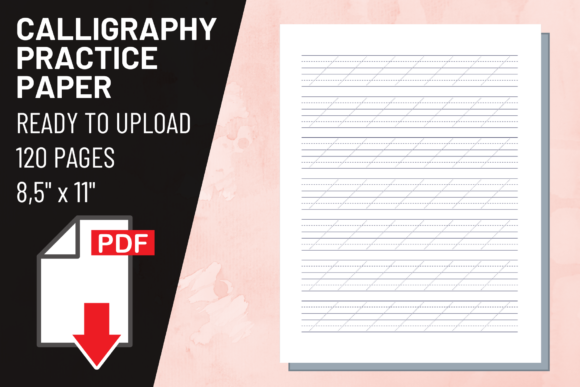
Creating a successful low-content book on Amazon KDP requires more than just uploading a generic template; it demands an understanding of the specific needs of your end user. For publishers targeting the lettering and penmanship niche, the quality of the interior directly influences customer satisfaction and review ratings. A professionally formatted KDP Interior Calligraphy Practice Paper serves as the foundation for a product that learners can actually use to improve their skills. When you utilize a pre-formatted 8.5″ x 11″ PDF at 300 DPI, you eliminate the technical friction between having an idea and holding a published proof copy in your hands.
The primary value of this specific interior package lies in its readiness and technical precision. Self-publishers often struggle with margin errors, blurry lines, or incorrect bleed settings that lead to rejected uploads or poor print quality. This 120-page file is engineered specifically for the no-bleed standard size, ensuring that every guideline sits perfectly within the safe zone. By starting with a high-resolution source file, you ensure that the faint guide lines essential for calligraphy practice remain crisp and legible after printing, rather than appearing as pixelated artifacts that frustrate users attempting delicate brush work.
Technical Precision for Professional Print Results
Calligraphy practice paper differs significantly from standard lined journal paper. It requires specific slant angles, baseline consistency, and appropriate spacing between guidelines to accommodate nib widths or brush tip variations. When sourcing or creating a KDP Interior Calligraphy Practice Paper, resolution is non-negotiable. The included 300 DPI specification is critical because Amazon’s printing process can amplify minor digital imperfections. Lines that look acceptable on a backlit monitor may print as jagged or gray-scale bands if the source resolution is insufficient.
This 8.5″ x 11″ format is the industry standard for instructional workbooks in the United States market. Adhering to this trim size maximizes compatibility with KDP’s distribution network and meets reader expectations for a workbook they can lay flat on a desk. The no-bleed configuration simplifies the design process further. Many new publishers attempt full-bleed interiors without fully grasping the shift requirements during trimming, resulting in guidelines being cut off at the edge of the page. A no-bleed PDF with properly calculated margins guarantees that the functional area of the practice sheet remains intact on every single page of the 120-page count.
Streamlining the Publishing Workflow
Time is a finite resource for freelancers, educators, and small business owners building a catalog of educational resources. Designing a mathematically accurate calligraphy grid from scratch involves complex vector work and repeated testing. Utilizing a ready-to-upload Calligraphy practice paper KDP interior allows you to bypass weeks of layout design. Instead of troubleshooting InDesign settings or worrying about gutter margins, you can focus on cover design, keyword research, and marketing strategy.
This efficiency extends beyond initial creation. If you plan to create a series—perhaps one book for Copperplate, another for Gothic, and a third for modern brush lettering—having a reliable base template ensures visual consistency across your brand. Readers who purchase one volume are more likely to buy subsequent volumes if the interior quality and layout logic remain uniform. The 120-page length provides substantial value to the consumer while keeping printing costs low enough to maintain healthy royalty margins, a crucial calculation for any sustainable publishing business.
Educational Value and User Experience
The ultimate success of any practice book depends on whether it actually helps the student learn. A KDP Interior Calligraphy Practice Paper must balance structure with freedom. High-quality interiors provide consistent repetition, which is essential for building muscle memory. When the guidelines are perfectly aligned from page to page, students can track their progress over time without visual distractions caused by shifting margins or varying line weights.
For educators and tutors, this type of interior supports curriculum development. Rather than photocopying degraded worksheets or drawing lines by hand, instructors can recommend or distribute a professionally printed resource. The 8.5″ x 11″ size offers ample workspace for adult learners who need room for larger strokes and annotations. Unlike smaller journals, this format accommodates the arm movement necessary for proper calligraphic technique, reducing hand cramping and encouraging better form. This practical utility transforms a simple notebook into a legitimate learning tool.
Targeting Specific Niches Effectively
While general calligraphy books have broad appeal, specific applications often yield better engagement. Consider how this interior serves different segments of the 20–50 demographic:
- Wedding Planners and DIY Brides: Individuals learning envelope addressing and place card writing need consistent practice space to master spacing before committing to expensive stationery.
- Bullet Journal Enthusiasts: This demographic values aesthetics and functionality. A dedicated practice book allows them to refine headers and titles without wasting pages in their daily planners.
- Art Therapists and Coaches: Repetitive stroke practice is often used as a mindfulness exercise. A clean, high-quality interior facilitates this meditative aspect of lettering without technical distractions.
- Graphic Design Students: Learning traditional hand-lettering complements digital typography skills. A standardized practice pad helps bridge the gap between analog foundations and digital application.
Understanding these use cases helps in writing better book descriptions and selecting relevant keywords. You aren't just selling paper; you are selling the outcome of improved handwriting, wedding readiness, or creative relaxation.
Navigating Limitations and Quality Control
Transparency regarding product specifications builds trust and reduces returns. While a no-bleed 8.5″ x 11″ PDF is versatile, it is not suitable for every project. If your vision includes decorative borders that extend to the very edge of the paper, this no-bleed file will not suffice. Publishers must distinguish between functional practice sheets and artistic coloring books. Additionally, standard KDP white paper has a specific opacity. While 120 pages provide excellent bulk, users employing heavy markers or alcohol-based inks should be advised that some bleed-through may occur regardless of the interior design. Including a "test page" note in your book description or introduction manages expectations effectively.
Before finalizing your upload, always order a physical proof. Screen calibration varies, and what appears as a perfect light gray guideline on your monitor might print too dark or too faint depending on the printer's current calibration. Verify that the 300 DPI rendering produces sharp lines and that the binding gutter does not encroach upon the usable writing space. This step is particularly important for calligraphy, where precision is the product. Checking the physical proof also confirms that the 120-page count feels substantial enough to justify your price point while remaining portable enough for daily use.
Maximizing the Asset Long-Term
A high-quality PDF file is a durable digital asset. Beyond direct KDP publishing, consider how this Calligraphy practice paper KDP interior fits into a broader ecosystem. Educators might use it as a supplementary text for workshops. Freelance designers could bundle it with digital courses as a physical companion resource. Small business owners in the stationery space might use it to validate demand before investing in offset printing for custom pads.
The key to leveraging this asset is maintaining high standards. Avoid cluttering the interior with excessive branding or distracting watermarks that interfere with practice. The best KDP Interior Calligraphy Practice Paper is invisible; it supports the user’s hand without demanding attention itself. By prioritizing usability, technical accuracy, and audience-specific relevance, you create a product that earns positive reviews and establishes your authority in the niche. Whether you are a first-time publisher or expanding an existing catalog, starting with a professional-grade, correctly specified interior file sets the stage for sustainable success in the competitive low-content market.