KDP Journal Interior 1: A Practical Guide to Undated 6x9 Daily Tracking Layouts
For self-publishers and low-content book creators, the foundation of a successful product lies not just in an eye-catching cover, but in the functional utility of the interior. KDP Journal Interior 1 represents a specific, streamlined approach to daily tracking that prioritizes user consistency over complex prompts. This resource provides a comprehensive, ready-to-upload solution for Amazon Kindle Direct Publishing, specifically designed for creators who want to offer a clean, effective mindfulness or productivity tool without the steep learning curve of custom typesetting.
Understanding the technical and practical nuances of this specific interior template is essential for setting accurate customer expectations and ensuring a smooth publishing process. This guide explores the structural elements, use cases, and strategic considerations for utilizing this 120-page undated layout effectively.
Anatomy of the Ready-to-Upload File Package
When acquiring or utilizing KDP Journal Interior 1, it is vital to understand exactly what is included in the digital asset package. This is not merely a collection of loose pages; it is a pre-formatted manuscript designed to meet KDP’s strict printing specifications immediately upon download.
The PDF Manuscript Specifications
The core deliverable is a single PDF file containing 120 pages formatted at 6 x 9 inches with bleed. The inclusion of bleed is a critical technical detail. In KDP printing, "bleed" means the content extends to the very edge of the paper, requiring no white margin border. This format is ideal for journals where background colors, lines, or decorative elements touch the page edge. Users must ensure their cover design also accounts for bleed dimensions to prevent misalignment during the binding process.
The page count of 120 strikes a strategic balance. It is substantial enough to feel like a complete quarterly tracker (covering approximately three months of daily entries) yet thin enough to maintain a competitive price point and low printing cost. The spine width generated by this page count is sufficient to allow for legible text on the book spine, which significantly enhances shelf appeal compared to thinner notebooks.
Visual Verification Assets
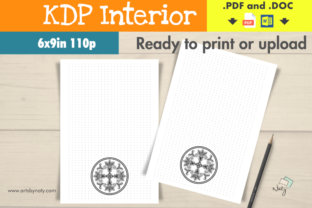
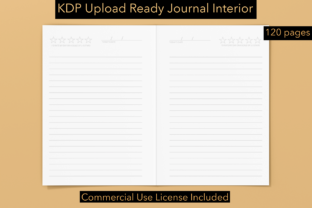
The package includes three PNG page images. While these are not used in the final print file, they serve an indispensable role in the marketing and quality assurance workflow. Creators should use these high-resolution images to:
- Create A+ Content: Display the actual interior layout on the Amazon sales page so customers know exactly what they are buying.
- Verify Formatting: Check margins and alignment before uploading to avoid rejection during the KDP review process.
- Social Media Marketing: Showcase the design aesthetic on Pinterest or Instagram without needing to photograph a physical proof copy.
Functional Design: The 5-Star Rating System
What distinguishes KDP Journal Interior 1 from generic lined notebooks is the integrated 5-star rating system located at the top of each page. This seemingly simple feature transforms the journal from a passive writing space into an active data-tracking tool. From a user experience perspective, this element serves multiple psychological and practical functions.
Reducing Friction in Habit Formation
One of the primary reasons journals fail is decision fatigue. When a user opens a blank notebook, they must decide what to write, how to structure it, and whether they have the mental energy for deep reflection. The pre-set rating scale removes this barrier. Even on days when a user cannot articulate their feelings in words, they can circle a star rating. This micro-interaction maintains the habit loop, keeping the user engaged with the physical book even during low-motivation periods.
Longitudinal Self-Assessment
Over the course of 120 pages, the star ratings create a visual dataset. Users can quickly flip through the journal and identify patterns in their well-being or productivity. For professionals and business owners using this as a performance log, the stars might represent output quality or focus levels. For mental health users, they may represent mood stability. This duality makes the interior versatile across different niches without requiring text changes.
Strategic Advantages of Undated Layouts
The decision to utilize an undated format in KDP Journal Interior 1 is a deliberate inventory management strategy. Dated journals carry significant risk; if they do not sell within the current year, they become obsolete dead stock. An undated interior eliminates this expiration date entirely.
Furthermore, undated layouts respect the user's autonomy. Not everyone journals every single day. With a dated diary, skipping three days results in wasted pages and a sense of failure. With this undated 6x9 format, users can skip weeks or months and resume seamlessly. This flexibility increases the perceived value of the product, as the consumer feels they are purchasing a durable tool rather than a disposable calendar.
Right and Left Facing Page Dynamics
A frequently overlooked aspect of KDP interiors is gutter margin management. KDP Journal Interior 1 is engineered with proper right and left facing page mirroring. This ensures that the 5-star rating and writing lines remain consistently positioned relative to the binding.
In a 6x9 trim size, the gutter (the inner margin near the spine) consumes valuable real estate. If an interior is not properly mirrored, content can get swallowed by the binding, making the journal frustrating to use. This template accounts for the safe zone requirements inherent to KDP’s paperback manufacturing process. Creators should never attempt to center-align identical pages for both sides of the sheet; doing so will result in uneven margins once bound. Utilizing this pre-formatted template mitigates the risk of formatting errors that lead to negative reviews regarding readability.
Ideal Use Cases and Target Audiences
While the interior is minimalist, its application is broad. Understanding who benefits most from this specific layout helps in crafting targeted metadata and advertising copy.
- Mental Health and Therapy Adjuncts: Therapists often recommend mood tracking between sessions. The star rating provides immediate quantitative data to discuss during appointments, while the open space allows for qualitative processing.
- Productivity and Agile Professionals: For those practicing Scrum or personal Kanban, the daily rating can track velocity or satisfaction with completed tasks. The compact 6x9 size fits easily into laptop bags or desk organizers.
- Students and Academics: Used as a study log, the rating system can correlate hours studied with comprehension retention, helping students optimize their schedules based on historical performance data.
- Creative Writers and Artists: Creatives often struggle with subjective self-evaluation. Rating daily creative output helps separate self-worth from productivity, fostering a healthier relationship with their craft.
Evaluating Suitability and Limitations
No single interior serves every purpose. Before listing KDP Journal Interior 1, creators must assess whether it aligns with their brand promise and audience needs.
Strengths to Leverage
The primary strength is simplicity. In a market saturated with overly complex guided journals, a clean interface stands out as a sanctuary of calm. The 120-page length is also optimal for subscription-style models or series bundling (e.g., selling a "Year of Reflection" set comprising four volumes). The inclusion of bleed-ready files signals professional quality, distinguishing the product from amateur uploads with visible white borders.
Considerations and Constraints
Creators must recognize that this interior lacks structured prompts. Customers seeking gratitude lists, scripture references, or cognitive behavioral therapy worksheets will find this insufficient. Transparency in the product description is paramount. Clearly state that this is a freeform tracking journal to prevent returns from buyers expecting guided content.
Additionally, because the cover is not included, the success of this product relies heavily on the creator's ability to design a cover that visually communicates the interior's function. A mismatched cover that suggests a planner or sketchbook will lead to customer dissatisfaction. The cover art must reinforce the concept of daily rating and open reflection.
Best Practices for Implementation
To maximize the potential of this asset, follow these practical guidelines during the publishing workflow:
- Keyword Optimization: Since the interior is generic, your keywords must be specific. Instead of just "journal," target long-tail phrases like "undated mood tracker notebook," "daily star rating diary," or "minimalist wellness journal 6x9."
- Interior Preview: Always upload the provided PNG samples to the "Look Inside" feature or A+ Content module. Conversion rates for low-content books increase significantly when buyers can verify the line spacing and header design.
- Paper Selection: For a 6x9 journal involving handwriting, standard white paper is usually sufficient. However, if you anticipate users employing markers or gel pens, consider noting in the description that some bleed-through may occur, or select cream paper which tends to be slightly more opaque and easier on the eyes for evening journaling.
- Series Potential: Because this is an undated, modular 120-page format, plan for scalability. Create a consistent branding system that allows users to collect multiple volumes. The uniformity of KDP Journal Interior 1 makes it perfect for building a recognizable product line.
Final Thoughts on Value Proposition
KDP Journal Interior 1 offers a pragmatic entry point for publishers seeking to provide genuine utility in the low-content space. By combining technical compliance (bleed, correct margins, appropriate page count) with psychological usability (star ratings, undated freedom), it addresses the two most common failure points in self-published journals: poor manufacturing quality and user abandonment.
Success with this template does not come from reinventing the wheel, but from positioning a reliable, well-engineered wheel in front of the right audience. Whether serving as a therapeutic aid, a productivity metric, or a creative outlet, this 6x9 undated interior provides the silent scaffolding necessary for users to build meaningful daily practices. For the publisher, it represents a sustainable, evergreen asset that respects both the platform's technical demands and the end-user's need for clarity.